Bottom-up processing is a type of information processing where stimuli are understood or interpreted beginning with the smallest of details and then moving to more complicated concepts. This is different from top-down processing which involves creating an overall impression before searching for evidence that supports this idea. The visual processing of a street in the city can initially give an impression that the area is chaotic, noisy, and full of people. To confirm their hypothesis it is possible to look for signs such as crowds of people moving through, or the sound of traffic from nearby vehicles.
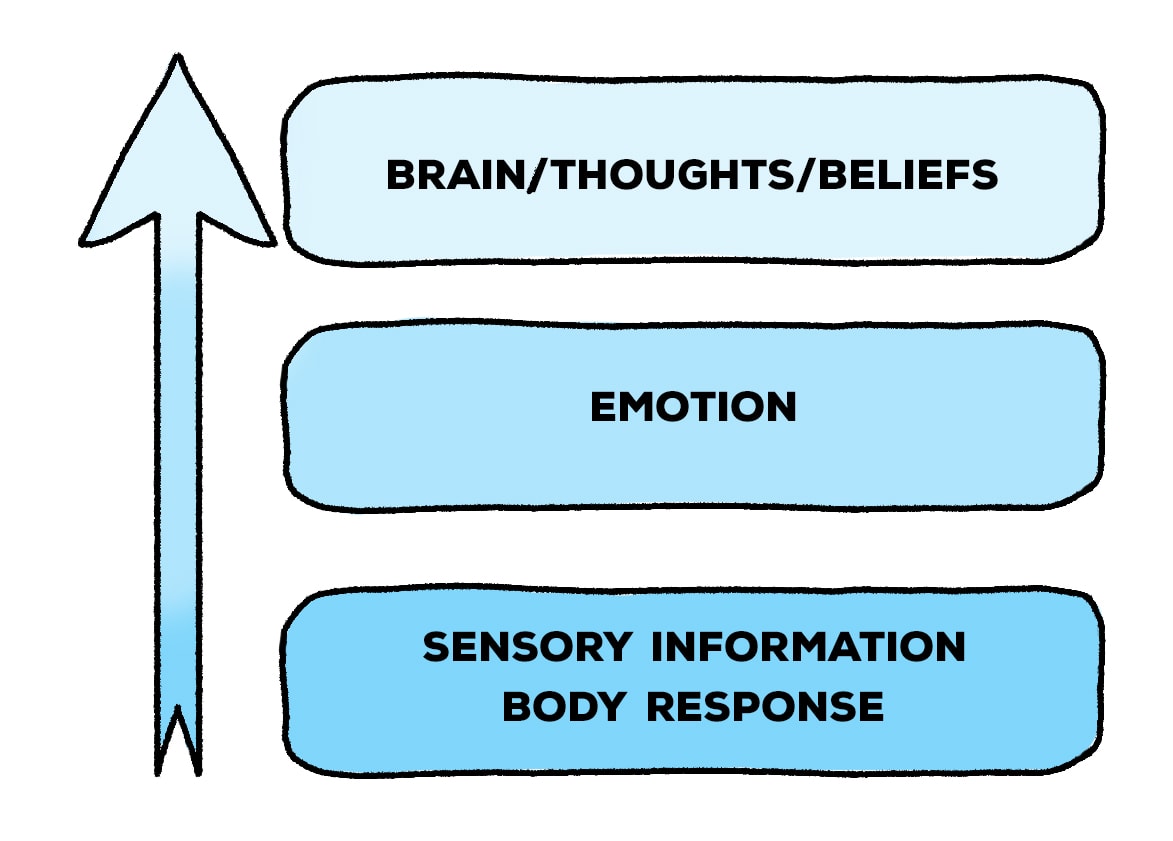
Bottom-up processing is more data-driven and analytical, and has been extensively studied with regard to cognitive tasks such as memory and perception. However, it can also be a significant factor in other areas of our lives, including decisions or creative pursuits like art or design. Bottom-up processing can be utilized effectively and efficiently to tackle more difficult problems and gain more insight into the underlying causes. Bottom-up processing, despite an unpopular reputation within academic circles, is extremely beneficial to understand the world around us as well as our inner workings.
The brain’s intricate circuitry is central to our thinking and actions, as well as our decisions. The brain’s processes this complex organ play an important part in everything from brain’s memory and intelligence to our moods and behavior. One particular mechanism that has been identified to influence the way that the brain functions is referred to as bottom-up processing. This describes how information gets processed at the level of the individual neurons or nerve cells and is then processed through interconnected neural pathways which ultimately affect higher cognitive functions such as perception and attention. The process has been proven to have significant effects on memory and learning. It could also be helpful in the treatment of diseases like schizophrenia or Alzheimer’s. Thus, by better understanding bottom-up processing and its mechanisms that we could be able to unravel some of the mysteries underlying brain function, opening the way for the development of powerful new tools in neuroscience and healthcare.
Bottom-up processing is the way our brain process information. This is in contrast to top-down, which is more focused on incorporating expectations and previous knowledge into the process of learning. Bottom-up processing relies only on new and raw data. Bottom-up processing can be a fantastic method to improve your knowledge for all levels of learners by focusing on specific elements of the learning process. This includes basic words and vocabulary, as well as complex concepts and ideas.
Bottom-up processing can offer a benefit it allows us to examine each piece of information in its entirety as it comes into our system, and allows us to step back. This keeps us in the loop and inspired to learn new concepts, develop existing ones, and identify opportunities for improvement. To help us better understand the content, we should additionally highlight how the concepts are connected through networks and logical chains. Bottom-up processing is a great way to develop as better learners and efficient communicators through bottom up processing.
For more information, click Bottom up processing